

Coordinating group transport for high-level business events in the Nice Côte d’Azur region means facing tight schedules, diverse attendee needs, and expectations for premium service. The right travel arrangements can enhance your event’s reputation and relieve logistical stress, making every arrival feel effortless and dignified. By focusing on seamless logistics and luxury group solutions, you set the stage for an impressive and memorable experience from the very first mile.
Table of Contents
- Step 1: Define Group Needs And Event Requirements
- Step 2: Select Premium Vehicles And Reliable Providers
- Step 3: Coordinate Personalized Schedules And Routes
- Step 4: Implement Security And Privacy Protocols
- Step 5: Verify Seamless Transfers And Communication
Quick Summary
| Key Point | Explanation |
|---|---|
| 1. Assess Group Needs Early | Collect relevant details like group size, accessibility, and budgets to streamline transportation planning. |
| 2. Choose Premium Providers | Select transportation providers focusing on luxury vehicles and professional chauffeurs for a seamless experience. |
| 3. Implement Real-Time Coordination | Utilize GPS and communication tools to manage transportation schedules and meet participants' needs effectively. |
| 4. Ensure Safety Protocols | Establish robust security measures and data protection protocols to safeguard participant information during events. |
| 5. Optimize Communication | Create dedicated channels for real-time updates and clear communication to enhance coordination and participant experience. |
Step 1: Define group needs and event requirements
Successfully organizing group transportation for IT events starts with understanding and mapping out your specific logistical requirements. By thoroughly assessing your attendees' needs upfront, you'll create a smoother, more efficient travel experience that sets the tone for your entire event.
When defining group needs, you'll want to start by collecting critical details that impact transportation planning. Comprehensive event transportation research suggests focusing on several key parameters:
- Group Size: Determine the exact number of attendees requiring transportation
- Accessibility Requirements: Identify any special mobility needs for participants
- Time Constraints: Establish precise arrival and departure windows
- Venue Proximity: Understand the distance between transportation origins and event location
- Budget Parameters: Define per-person transportation spending limits
These granular details transform abstract planning into actionable transportation logistics. By creating a detailed profile of your group's requirements, you can select transportation solutions that match your specific event characteristics perfectly.
Here's how different group transportation options align with IT event priorities:
| Transportation Solution | Best For | Drawback |
|---|---|---|
| Executive Car Service | VIP speakers, executives | Limited capacity for large groups |
| Luxury Shuttle Bus | Large attendee groups | Less privacy compared to car service |
| Electric Vehicle Fleet | Sustainability goals | Range may be limited for long routes |
| Accessible Minivans | Mobility needs | Requires early booking for availability |
The next step involves translating these requirements into concrete transportation options, evaluating potential providers who can meet your precise specifications. Your initial groundwork will directly influence the quality and reliability of group transportation arrangements.
Pro tip: Create a comprehensive spreadsheet tracking all participant transportation needs at least six weeks before the event to ensure seamless coordination.
Step 2: Select premium vehicles and reliable providers
Choosing the right vehicles and transportation providers is crucial for creating a seamless and professional group travel experience for your IT event participants. Your selection will directly impact attendee comfort, event perception, and overall logistical success.
Premium vehicle selection involves carefully evaluating transportation options that align with the sophisticated expectations of IT industry professionals. Consider these key factors when making your choice:
- Vehicle Diversity: Look for providers with a range of luxury options
- Executive Fleet: Prioritize modern Mercedes models and electric vehicles
- Professional Chauffeurs: Ensure drivers are experienced with corporate clientele
- Safety Standards: Verify comprehensive safety protocols and maintenance records
- Sustainability Options: Select providers with eco-friendly transportation solutions
The top-tier transportation providers distinguish themselves through several critical characteristics. They offer not just vehicles, but complete transportation experiences tailored to high-profile corporate events. This means going beyond basic transit to deliver a premium service that reflects your organization's professional standards.
Professional transportation is more than movement - it's about creating a seamless, dignified travel experience for your event participants.
Your vehicle selection should communicate the same level of precision and excellence that defines your IT event. By meticulously vetting providers and their fleets, you demonstrate your commitment to participant comfort and event quality.
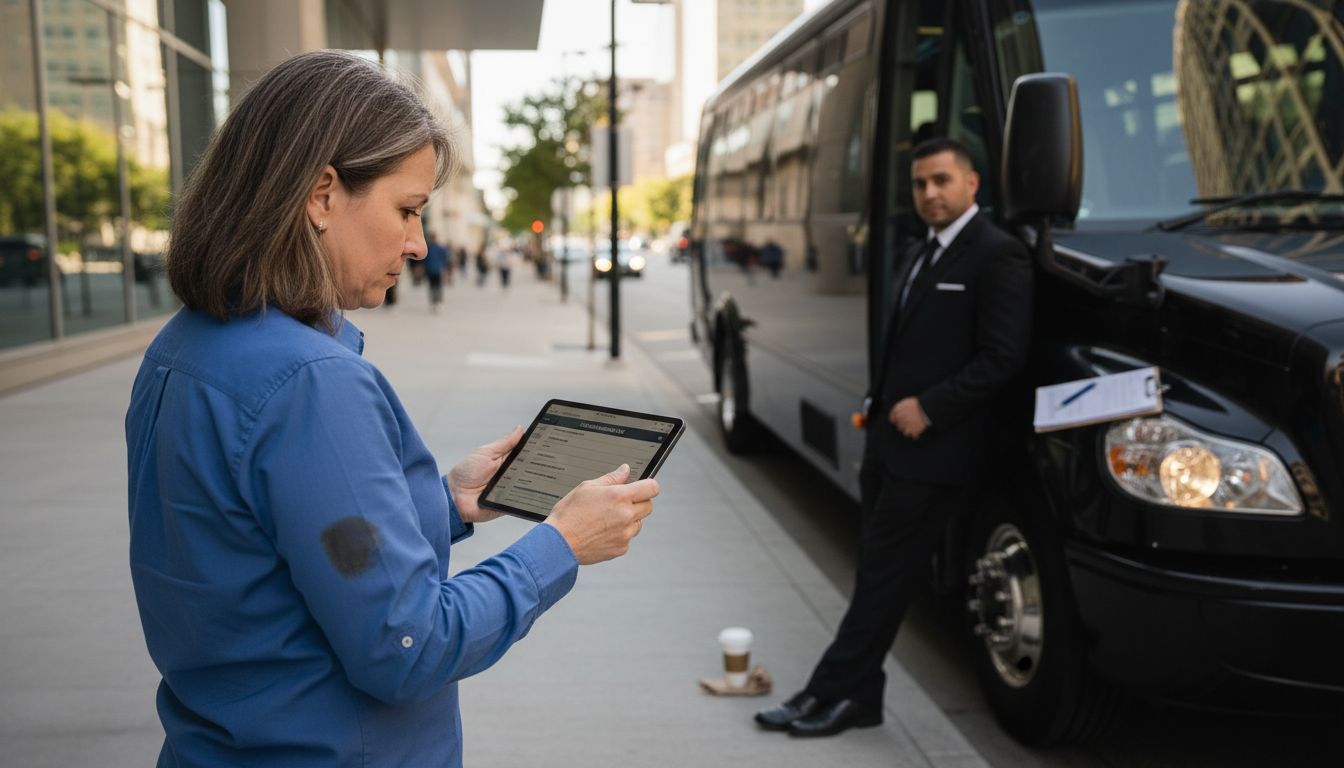
Pro tip: Request comprehensive documentation including driver credentials, vehicle maintenance records, and insurance certificates before making a final provider selection.
Step 3: Coordinate personalized schedules and routes
Effective group transportation for IT events demands precision in scheduling and routing, transforming complex logistical challenges into seamless participant experiences. Your goal is to create a synchronized travel plan that accommodates individual needs while maintaining overall event efficiency.
AI route optimization tools have revolutionized how event planners manage group transportation, enabling dynamic and intelligent scheduling strategies. Consider implementing these critical coordination techniques:
- Real-Time Tracking: Utilize GPS and live monitoring systems
- Flexible Routing: Build adaptable transportation plans
- Centralized Communication: Establish clear information sharing channels
- Contingency Planning: Develop backup routes and alternative transportation options
- Individual Preference Management: Incorporate participant-specific travel requirements
Leveraging collaborative scheduling applications allows you to streamline complex transportation logistics. These digital tools help eliminate scheduling conflicts, manage group movements, and ensure punctual arrivals across multiple venues or pickup locations.
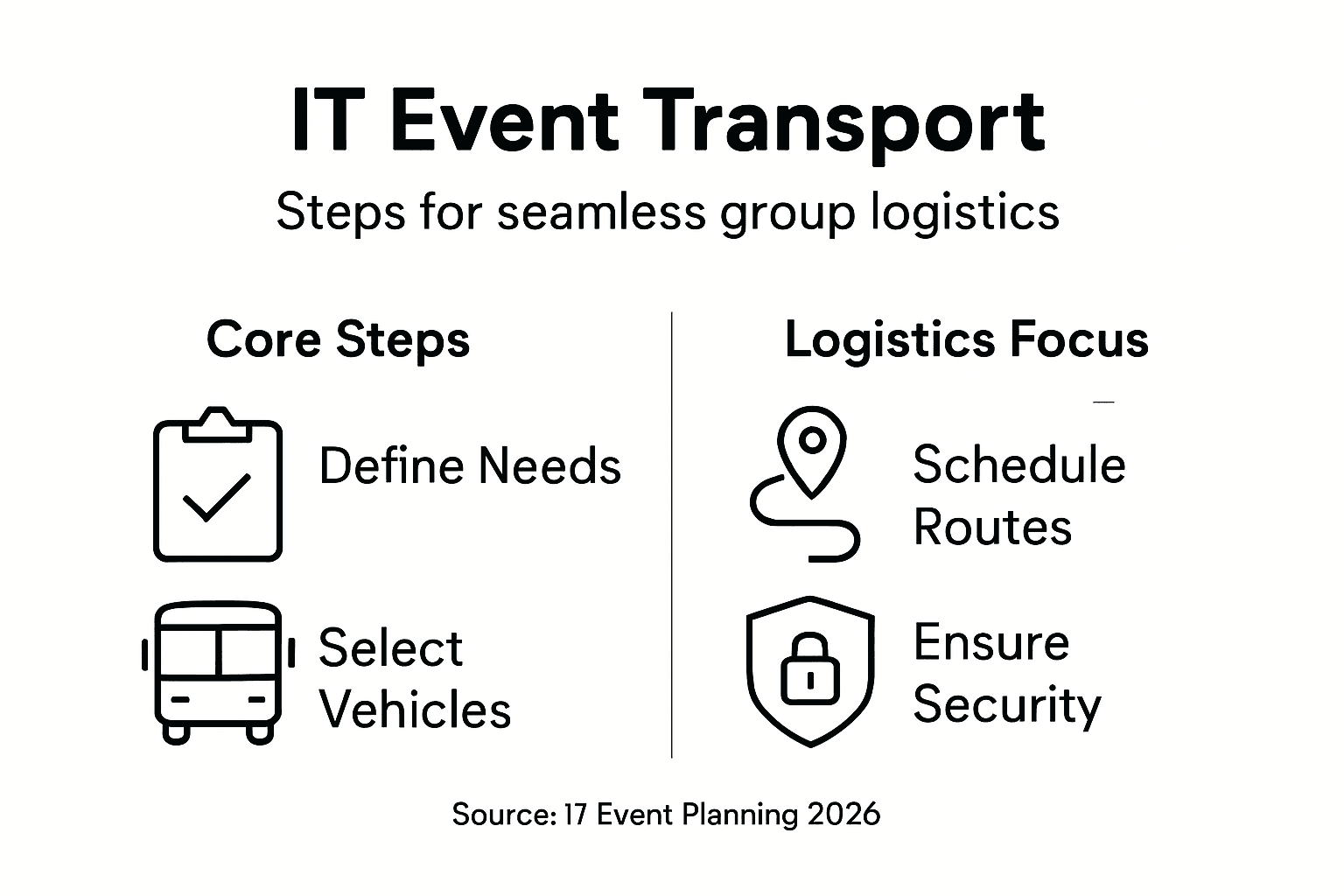
Compare leading digital tools for streamlining group travel coordination:
| Tool Type | Example Use | Benefit |
|---|---|---|
| AI Routing App | Optimizing schedules | Increases route and time accuracy |
| Centralized Dashboard | Real-time updates | Improves communication flow |
| Scheduling Platform | Conflict avoidance | Reduces timing misunderstandings |
Successful transportation coordination is about anticipating needs before they become problems.
The key is creating a flexible yet structured approach that prioritizes participant convenience while maintaining overall event timing and logistical integrity. Your scheduling strategy should feel personalized yet professionally managed.
Pro tip: Create a shared digital dashboard where participants can input their specific transportation preferences and receive real-time update notifications.
Step 4: Implement security and privacy protocols
Protecting sensitive information and ensuring participant safety are paramount when coordinating group transportation for high-stakes IT events. Your security strategy must be comprehensive, proactive, and multilayered to safeguard both digital and physical transportation infrastructure.
Cybersecurity in transport systems requires a holistic approach that addresses potential vulnerabilities across multiple domains. Consider implementing these critical security protocols:
- Digital Encryption: Secure all communication channels
- Access Control: Limit transportation system entry points
- Staff Training: Develop comprehensive cybersecurity awareness programs
- Data Protection: Implement robust privacy management techniques
- Incident Response: Create clear protocols for potential security breaches
Transport Layer Security protocols provide an essential framework for protecting sensitive attendee information during event transportation. These technical safeguards ensure that communication networks remain confidential and tamper-resistant.
Security is not a destination, but a continuous journey of vigilance and adaptation.
Effective security goes beyond technical implementations. It requires creating a culture of awareness where every team member understands their role in maintaining comprehensive protection for event participants.
Pro tip: Conduct a comprehensive security audit at least two weeks before the event, simulating potential cyber and physical security scenarios.
Step 5: Verify seamless transfers and communication
Ensuring smooth, coordinated group transportation requires meticulous attention to communication and transfer logistics. Your goal is to create a fluid, responsive system that anticipates potential challenges and provides real-time solutions for event participants.
Integrated mobility management systems have transformed how event planners coordinate complex transportation networks. Consider implementing these critical verification strategies:
- Real-Time Tracking: Monitor vehicle locations continuously
- Digital Communication Platforms: Establish centralized notification systems
- Contingency Mapping: Develop alternative routing options
- Passenger Coordination: Create precise pickup and drop-off protocols
- Instant Notification Mechanisms: Enable immediate participant updates
Event transport management solutions leverage advanced technologies to maintain transparent, efficient group transportation. These innovative approaches incorporate mobile applications, GPS tracking, and centralized command centers that dramatically reduce communication friction.
Successful transportation coordination is about creating a seamless experience that feels effortless to participants.
The key is developing a proactive communication strategy that keeps all stakeholders informed and prepared. Your verification process should feel smooth, professional, and responsive to changing circumstances.
Pro tip: Create a dedicated communication channel with real-time updates and a single point of contact for all transportation-related inquiries.
Elevate Your IT Event Group Transportation with Customized Luxury in the French Riviera
Organizing seamless group transport for your IT event in 2026 demands more than just booking vehicles. It requires precise coordination, premium vehicle selection, and trusted providers who understand the unique needs of corporate clients. Whether accommodating VIP speakers with modern Mercedes-Benz sedans or larger groups requiring spacious vans, managing punctual schedules and secure transfers is critical to your event success. At Transponyx, we specialize in tailored VTC solutions designed to meet these exact challenges while delivering comfort and reliability across the Nice Côte d’Azur region.
Take full control of your IT event logistics by choosing Transponyx for your group transportation needs. Benefit from fixed rates, experienced bilingual chauffeurs, and a dedicated team that prioritizes personalized service. Explore how our corporate transportation offerings can reduce your planning stress and impress attendees with premium door-to-door transfers from Nice airport and beyond. Act now to secure your luxury transport solution and ensure smooth, secure transfers for your entire group.
Frequently Asked Questions
How can I determine the transportation needs for my IT event attendees?
To determine transportation needs, start by assessing key details like group size, accessibility requirements, time constraints, venue proximity, and budget limits. Gather this information at least six weeks before the event to create a detailed profile that informs your transportation planning.
What types of vehicles are best for transporting participants to IT events?
Select vehicles that match the expectations of professionals attending IT events, such as luxury shuttle buses for larger groups or executive car services for VIPs. Prioritize modern fleets and ensure the chosen provider can accommodate both comfort and safety standards.
How can I efficiently coordinate transportation schedules and routes for my IT event?
Utilize real-time tracking and flexible routing to ensure smooth coordination. Implement a centralized communication channel to share updates and keep participants informed, adjusting schedules as needed to respond to emerging circumstances.
What security measures should I implement for group transportation at IT events?
Implement digital encryption for communication, access control for entry points, and staff training on cybersecurity awareness. Conduct a comprehensive security audit at least two weeks prior to the event to identify potential vulnerabilities and strengthen your transportation protocol.
How can I ensure seamless transfers and communication during the event?
To ensure seamless transfers, use real-time tracking and centralized notification systems for clear communication with participants. Create precise pickup and drop-off protocols and develop contingency plans to address any potential issues or delays during transportation.
Recommended
- 7 Types of Luxury Transport for Cannes Lions Travelers
- Role of Luxury Transport at MIPIM 2026 Cannes
- Private Transport for Cannes Film Festival 2026
- Professional Chauffeur Services at Cannes AI Festival
- Which Urban Planning Software Is Best for Transportation and Traffic Flow Simulations?